
The Lenity Blog
Why Small Tasks Beat Big Goals: The 5-Minute Fix for Procrastination
You have a goal that matters to you. A lot. You think about it all the time.
And yet today? You didn't touch it.
You did answer emails, though. You checked Instagram. You cleaned something that didn't really need cleaning. You researched a completely unrelated topic.
What's going on?
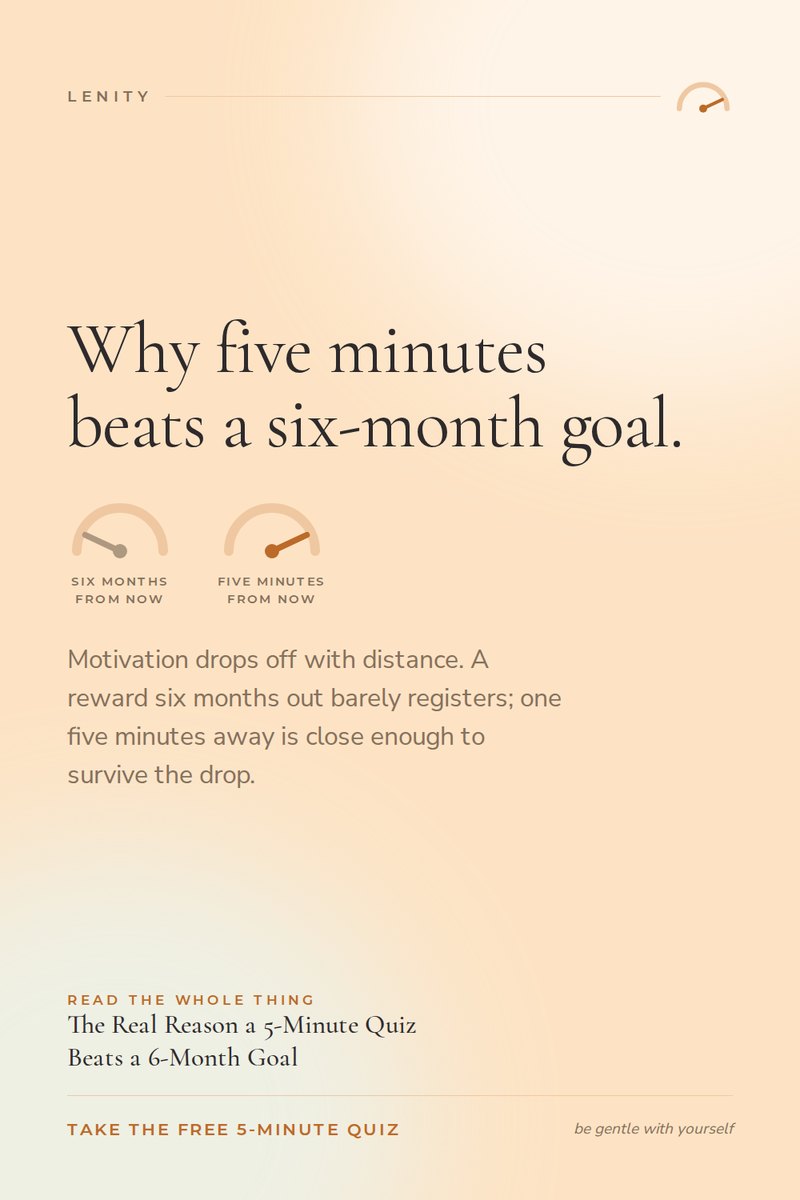
Your brain discounts rewards that are far away
Think about two options.
Option A: Spend five minutes doing something and get a clear result today.
Option B: Spend an hour working toward something that might pay off six months from now.
Even when Option B matters much more, Option A often wins. Why? Because the reward is close. The brain has an easier time responding to something it can see now.
This is one reason procrastination is so persistent. The long-term goal isn't necessarily less important. It's just competing against things with immediate rewards.
Your inbox has an unfair advantage
Open the email. Reply. Done. You get a tiny feeling of completion immediately.
Compare that with "build my new business." Where exactly do you start? And when will you know it's working? Six months from now?
The task has a huge psychological disadvantage.
This is why five minutes can change everything
A five-minute action has three advantages.
It's small. You can imagine finishing it.
It's immediate. You get feedback quickly.
It's relatively safe. You don't have to bet your entire future on it.
So instead of "I need to work on my six-month goal", try: "What's the five-minute version of this?"
Not "build the business." But: write down three problems I could solve.
Not "get healthier." But: put tomorrow's appointment in my calendar.
Not "write the book." But: write the first paragraph.
You're not lowering your ambition. You're changing the distance between intention and action.
Big goals are often too far away to pull you forward. A small action puts the reward within reach. Sometimes the most ambitious thing you can do is make the first step ridiculously easy.
Stop forcing yourself. Stop gritting through another week.
The way out of stuck was never more pressure — it's finding out which of your three batteries is running empty, and refilling that one. Autonomy, competence, connection: whichever is low is the one that decides how you start, and pushing harder on the other two is why the last attempt didn't hold.
The free 5-minute quiz tells you which one it is, and what actually works for your particular kind of stuck — so you can stop pushing against yourself and start going with yourself.
It's free, ~5 minutes
Others also read
The Puzzle Experiment That Explains Why You Procrastinate
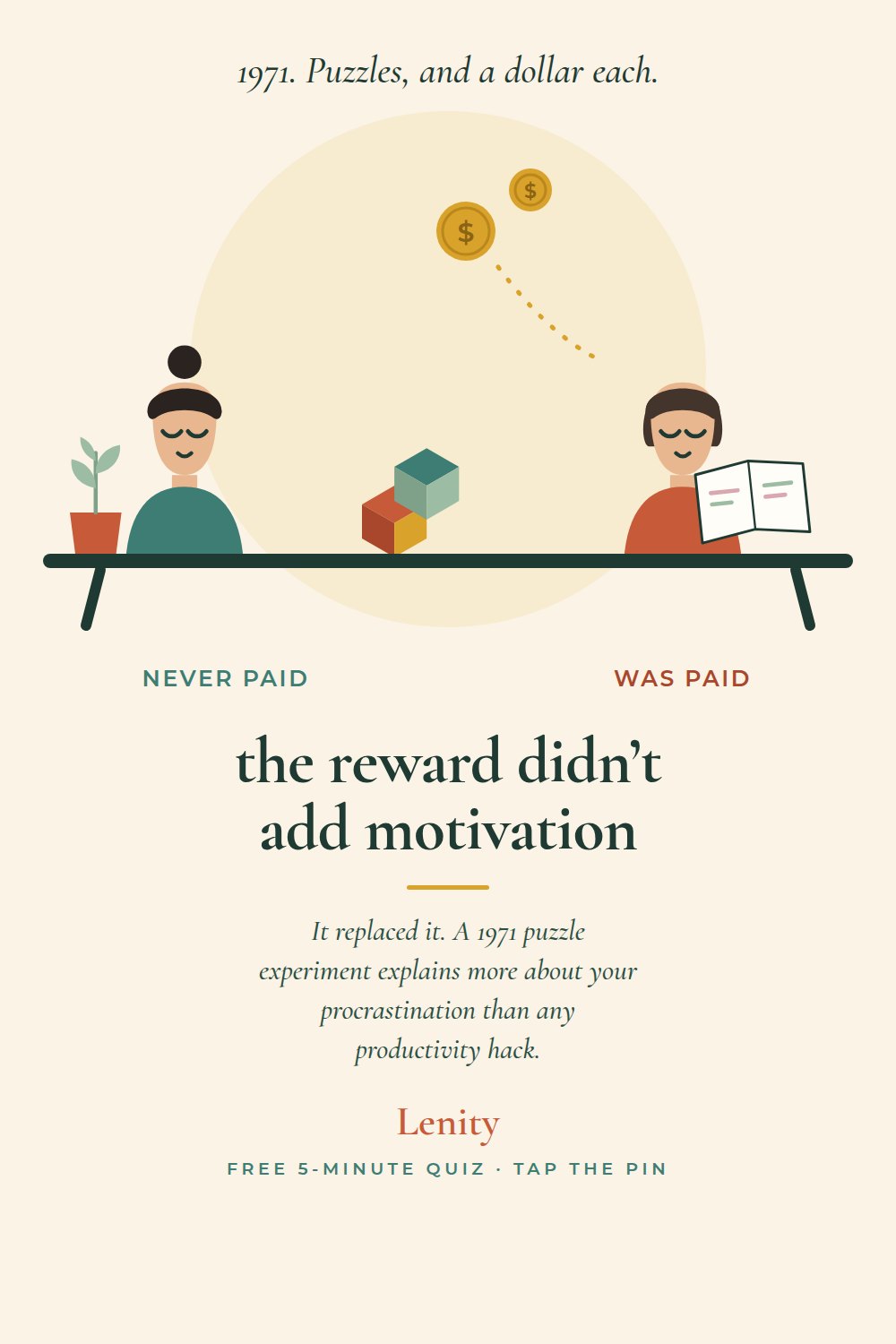
In 1971, a psychologist gave students paid puzzles — then watched what happened when the money stopped. The strange result became Self-Determination Theory, and it explains more about your procrastination than any productivity hack.
Why Almost-Finishing Something Gives You Nothing
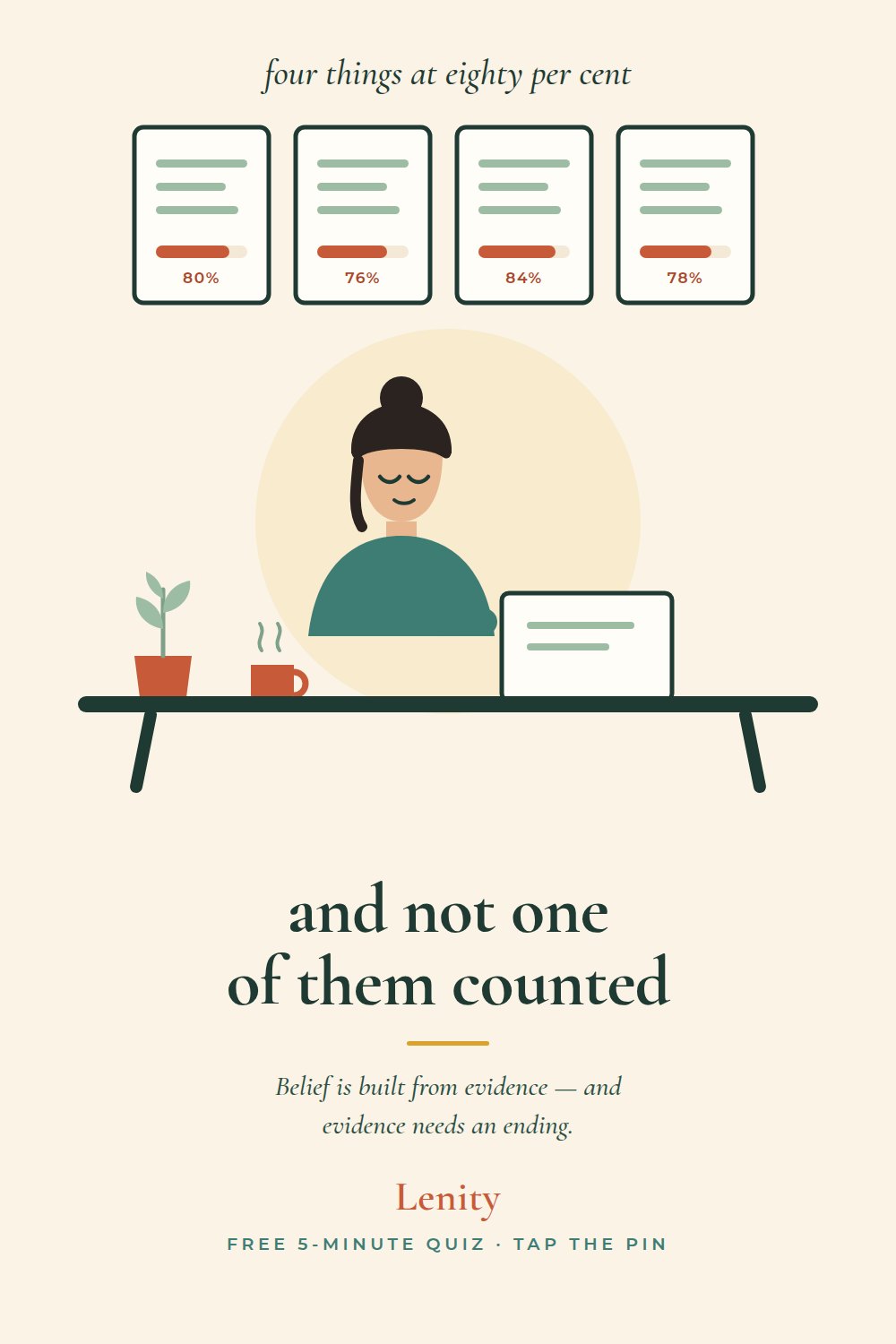
If you start things and never finish them, you may be missing the one thing your brain needs most: evidence that you can finish.
The Committee in Your Head: Why You Overthink Instead of Starting
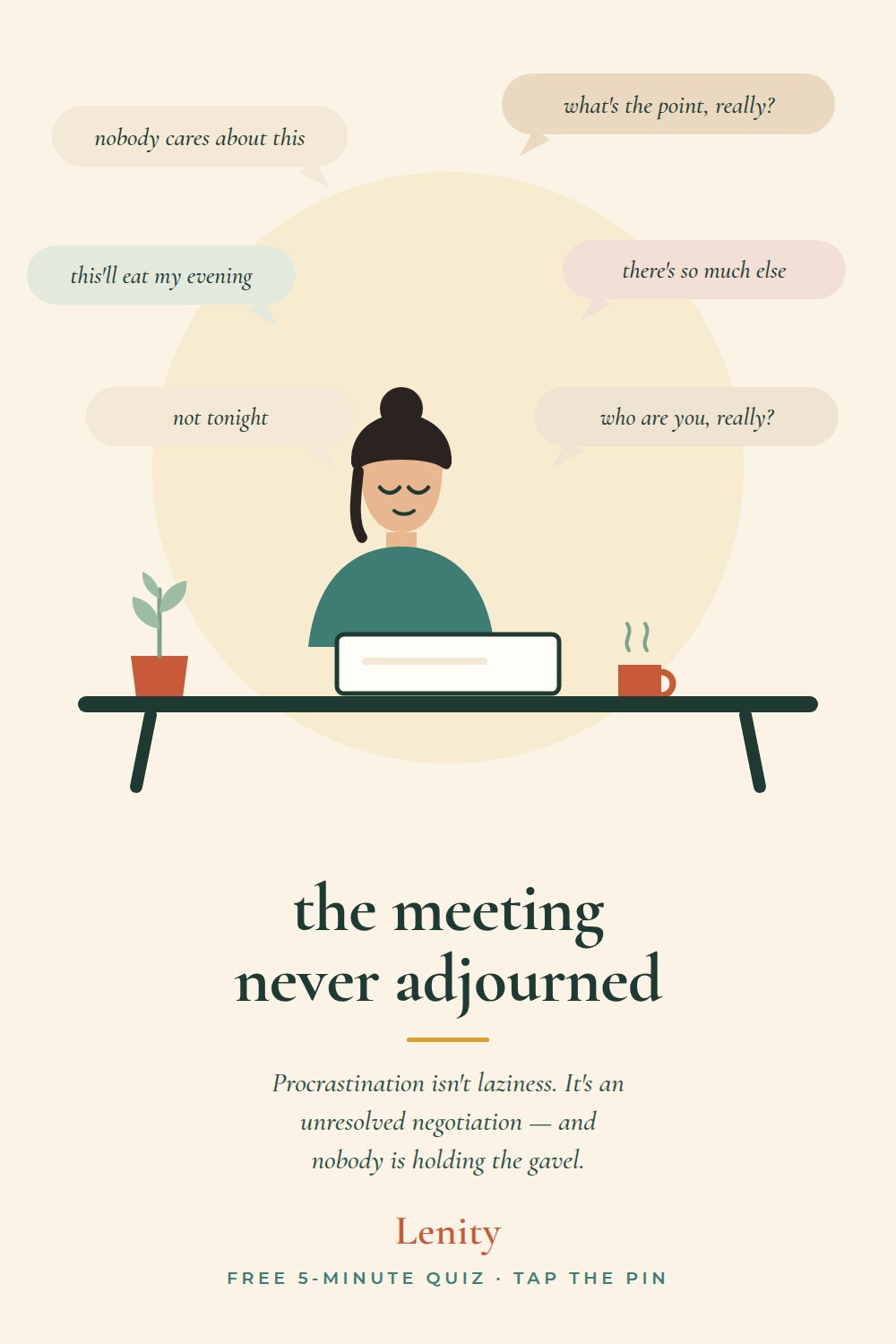
Overthinking can feel like problem-solving, but sometimes it's an unresolved debate. Here's how to end the meeting in your head.