
The Science
Self-Determination Theory: Why You Really Procrastinate
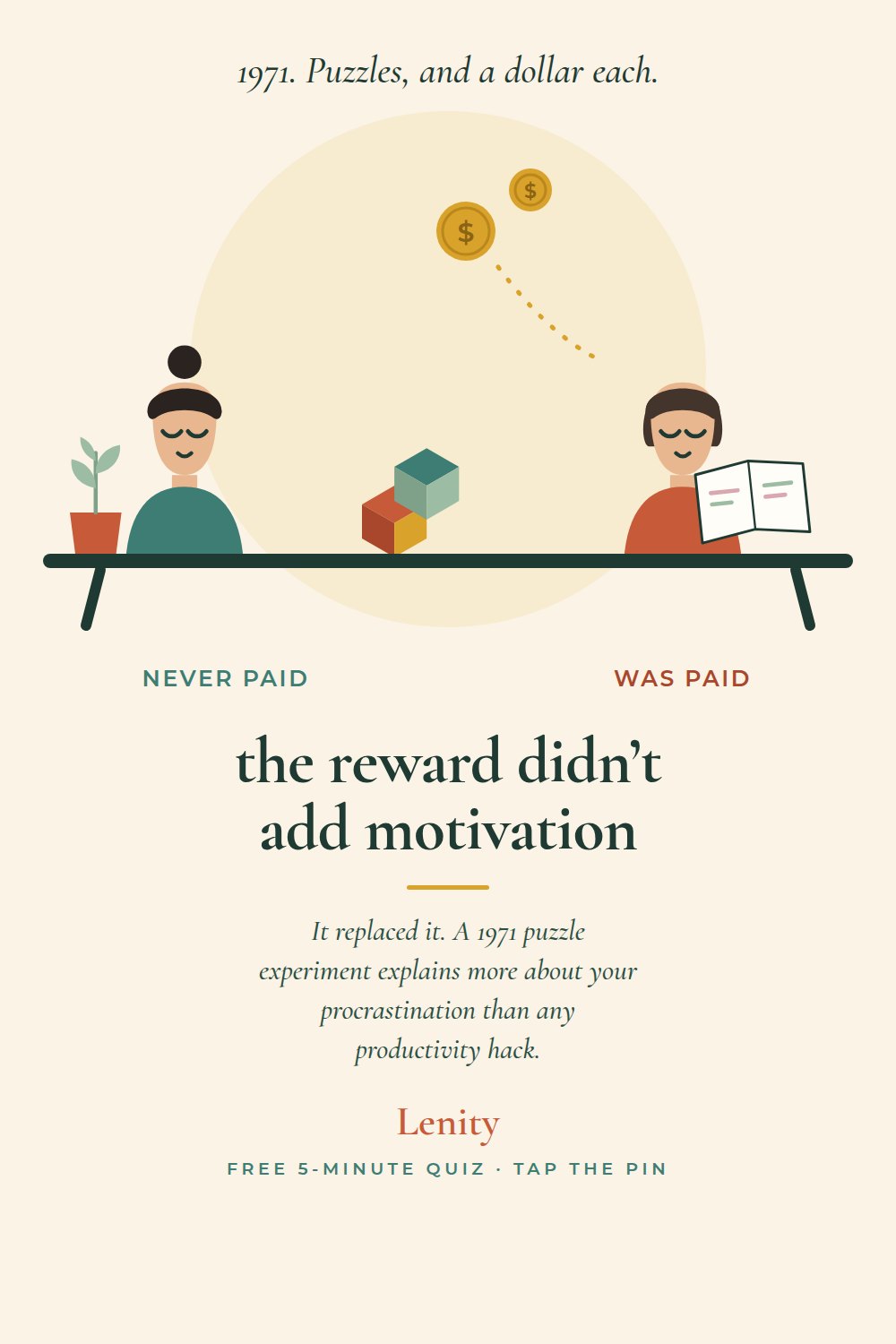
In 1971, a psychologist named Edward Deci ran a quiet experiment on a group of college students. Nothing about it looked like it would change how we understand procrastination — it was just puzzles, three sessions, a little bit of money.
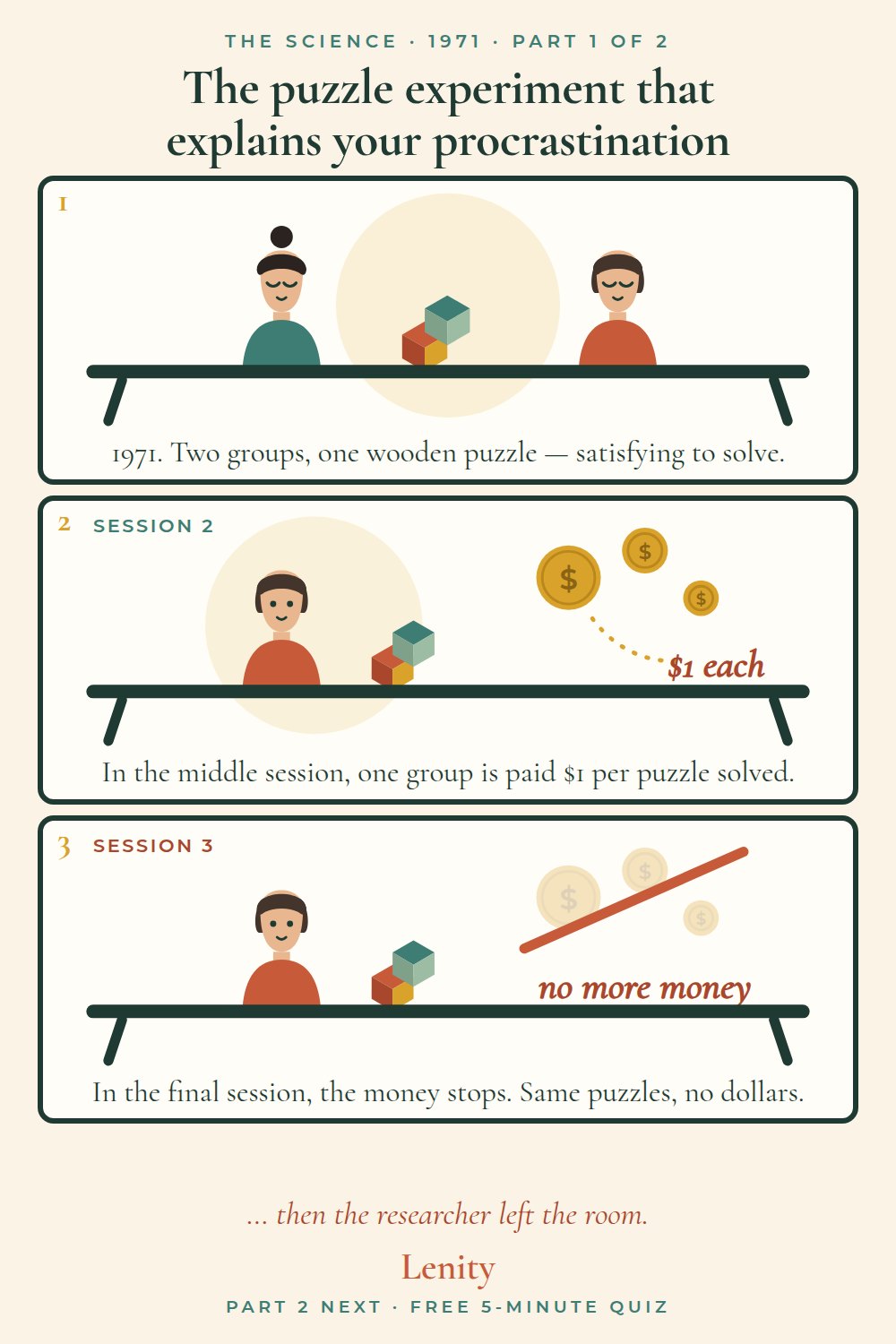
Deci had the students solve Soma cube puzzles: wooden 3D pieces that fit together into a target shape, the kind of thing that's genuinely satisfying to figure out. Over three separate sessions, one group was paid $1 for every puzzle they solved — but only during the middle session. A second group was never paid at all, in any session.
The moment that mattered
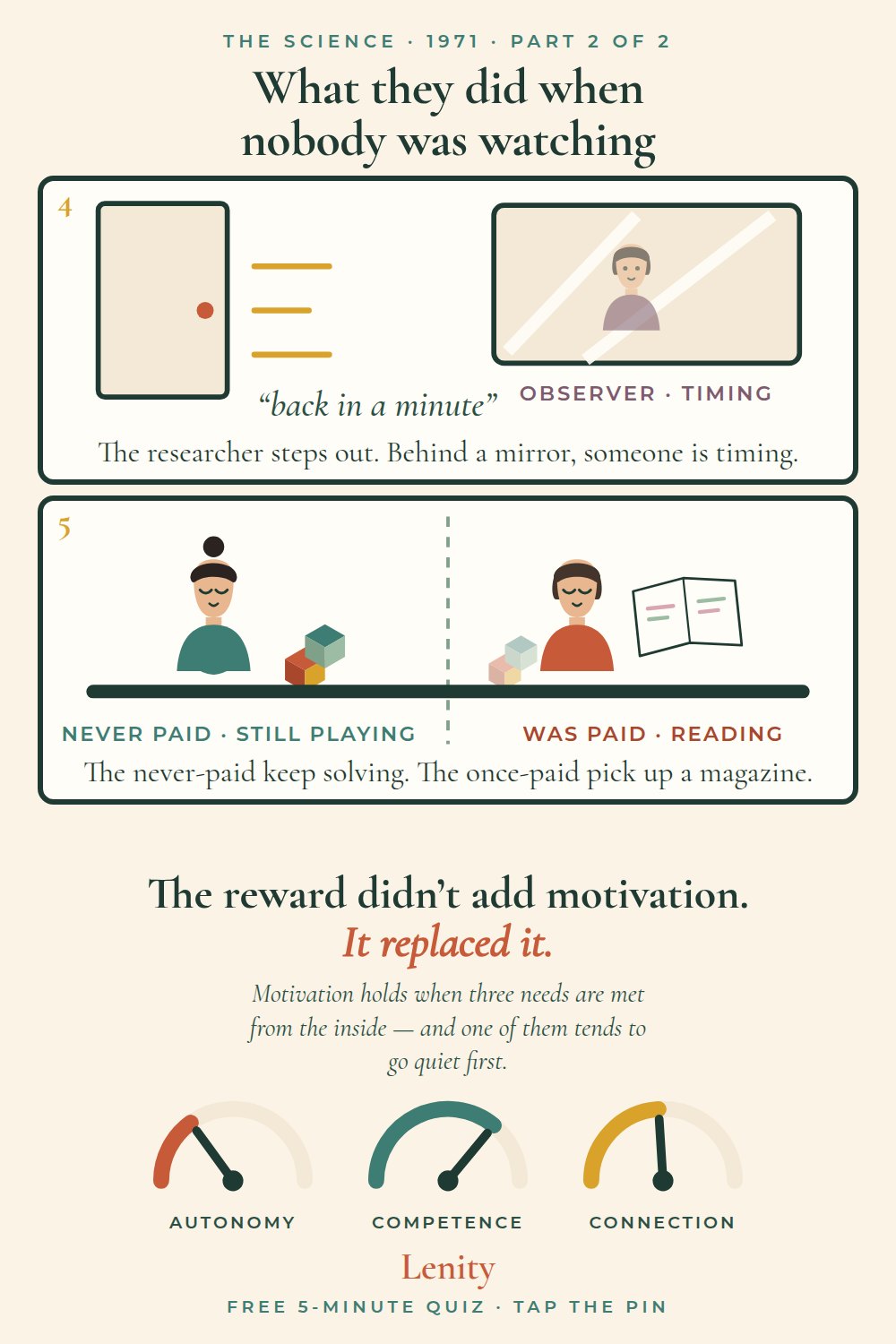
Here's the part that made this experiment famous. In the middle of each session, Deci told the students he needed to step out of the room for a few minutes — something about grabbing materials for the next part. He left them alone with the puzzles, a stack of magazines, and nothing telling them what to do next.
Behind a one-way mirror, an observer quietly timed exactly what each student chose to do with those unsupervised minutes: keep solving puzzles, or read a magazine instead.
The reward hadn't just failed to help. It had quietly replaced the students' own reason for wanting to solve the puzzles in the first place. Once solving was about the dollar, it stopped being about the satisfaction — and when the dollar disappeared, so did a chunk of their motivation.
From one strange finding to a full theory
That result didn't fit what psychology expected at the time. The dominant view was behaviorist: rewards should reinforce behavior, full stop. Instead, Deci had found the opposite — external rewards could undermine a motivation that was already there.
Deci spent the following decades developing this idea with his colleague Richard Ryan, and it grew into what's now called Self-Determination Theory (SDT) — one of the most researched motivation frameworks in psychology. Its core claim: people don't sustain motivation through willpower or external pressure. They sustain it by having three specific psychological needs met, from the inside.
Everyone has all three needs — the gauge just shows where each one tends to sit for you right now.
AUTONOMY
The choice to act feels genuinely yours — not something forced on you by guilt, a deadline, or someone else's expectations.
COMPETENCE
You feel capable of the task in front of you. Vague or oversized tasks read as threats, and stalling feels safer than risking visible failure.
RELATEDNESS
You feel connected to why this matters, or to people who see it the way you do — without it, effort starts to feel isolating.
What this has to do with procrastination
This isn't just a story about puzzles from over fifty years ago. Researchers have tested the same three needs directly against procrastination, in real workplaces, and found the pattern holds.
A 2025 study looked at two very different groups — everyday online workers and bank employees — and measured how psychological empowerment (which satisfies autonomy and competence) and psychological ownership (which satisfies relatedness) related to how much people procrastinated. Both were significantly linked to less procrastination, with psychological ownership showing the strongest effect. The pattern held across both groups, despite how different their jobs were.
In other words: procrastination often isn't a discipline problem. It's frequently a signal that one of these three needs — feeling like the choice is yours, feeling capable, or feeling connected to why it matters — has quietly gone missing for the task in front of you.
That's the idea Lenity's quiz is built on. Not "which productivity system should you try next," but which of these needs tends to go missing for you, specifically, and what your particular stuck pattern is actually trying to protect you from.
Sources: Deci, E. L. (1971). "Effects of externally mediated rewards on intrinsic motivation." Journal of Personality and Social Psychology. Workplace procrastination findings from a 2025 study in BMC Psychology, "Empowered, accountable, and committed? Applying self-determination theory to examine workplace procrastination."
It's free, ~5 minutes
Others also read
Why You Only Do It When It's Unfair Not To
If you only get things done when not doing them would feel unfair to someone else, it may not be laziness. It may be your sense of fairness.
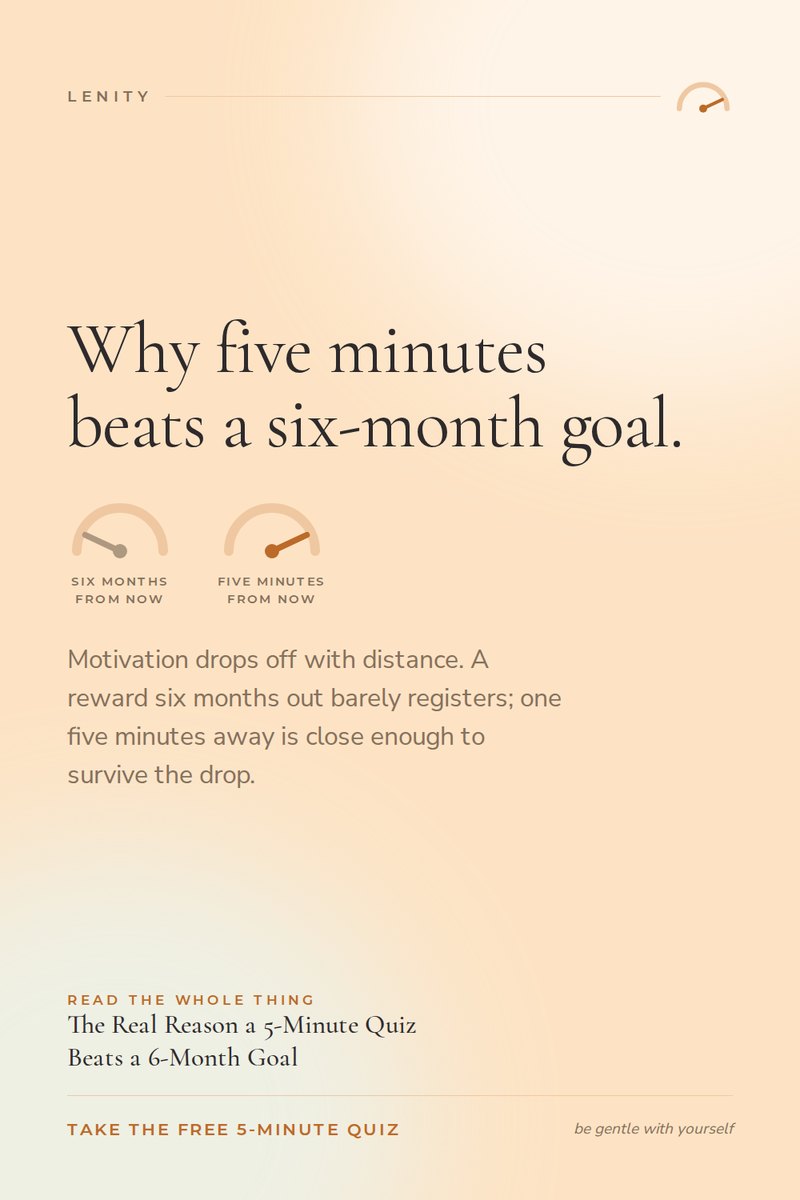
The Real Reason a 5-Minute Quiz Beats a 6-Month Goal
Long-term goals lose to immediate rewards surprisingly easily. Here's why five-minute tasks feel so much easier — and how to use that.
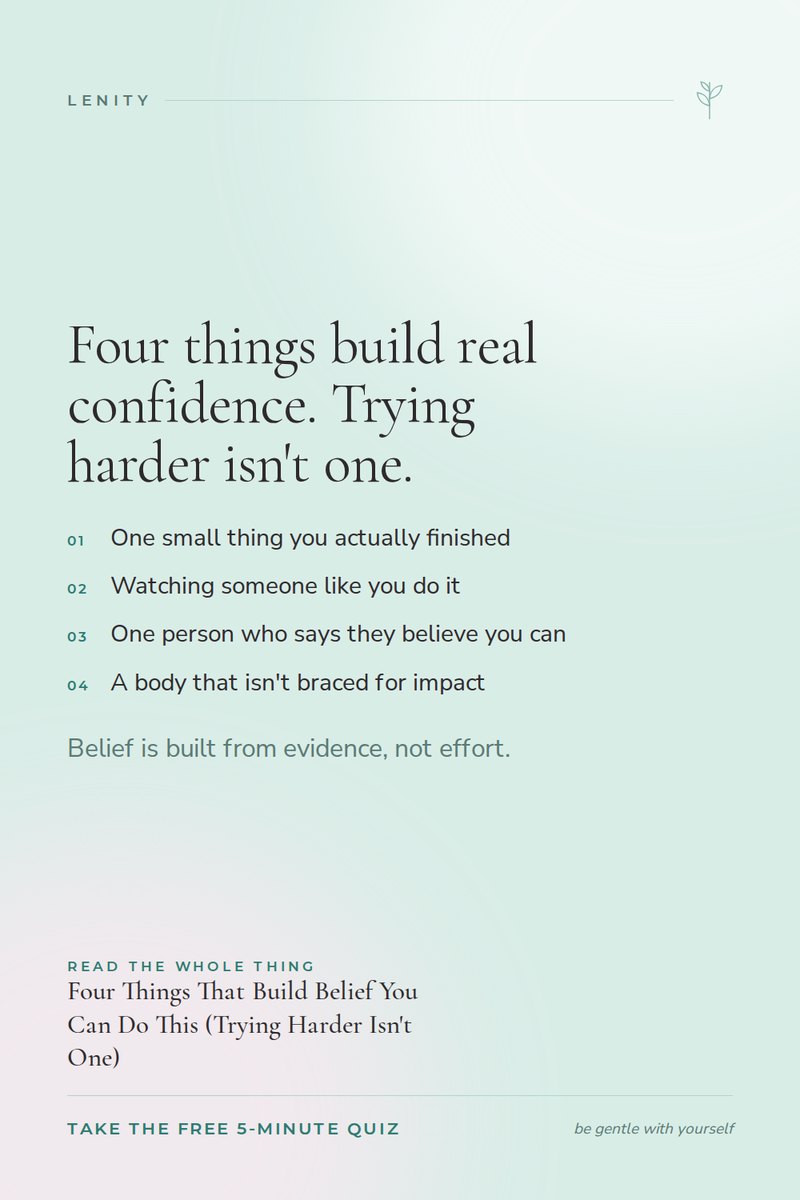
Four Things That Build Belief You Can Do This
Confidence isn't something you simply decide to have. It's built through four kinds of evidence — and trying harder isn't one of them.