
The Lenity Blog
Why You Can Only Get Things Done for Other People
There's a strange kind of procrastination that looks like this.
You don't do the thing. You know you should. You think about it. You avoid it.
And then suddenly someone else is going to be affected if you don't do it. And now? You're incredibly efficient. You finish it in twenty minutes.
You might even wonder: Why couldn't I have done this three days ago?
Maybe because the task didn't become more important. The fairness of the situation changed.
Your brain notices unfairness
Think about everything you're quietly responsible for. Remembering appointments. Knowing what needs to be bought. Following up with people. Noticing when something is running out. Remembering birthdays. Knowing what everyone needs next.
A lot of this work isn't even written down.
And when you start feeling like "Why am I the one who always has to do this?" — something changes. The task stops feeling like a simple task. It starts feeling like another thing you're carrying that nobody else seems to notice.
Your brain is sensitive to fairness. When something feels unfair, it can create resistance even when you genuinely care about the outcome.
That's why sometimes procrastination isn't "I don't want to do this." It's closer to "Why should I have to be the one doing this?"
Try naming it
The next time you keep avoiding something, don't immediately call yourself lazy. Ask: "Does this actually feel unfair?"
Maybe you're always the one organising the family holiday. Maybe you're doing work that belongs to three people. Maybe you're constantly being the responsible one. Maybe nobody explicitly asked you to take this on anymore — but somehow it became yours.
Naming that doesn't mean you have to blame anyone. It just means you stop misdiagnosing the problem.
Then you have three choices
You can change the balance. Ask someone else to take something over.
You can change the standard. Maybe this really doesn't need to be done perfectly.
Or you can choose the task deliberately. Sometimes life isn't fair. You still might decide: "I'm doing this because I care about the result."
That's very different from "I'm doing this because apparently everything is my responsibility." The work may be exactly the same. But the experience of doing it isn't.
Sometimes procrastination isn't your refusal to work. It's your brain quietly saying: something about this doesn't feel fair. Listen before you push.
Stop forcing yourself. Stop gritting through another week.
The way out of stuck was never more pressure — it's finding out which of your three batteries is running empty, and refilling that one. Autonomy, competence, connection: whichever is low is the one that decides how you start, and pushing harder on the other two is why the last attempt didn't hold.
The free 5-minute quiz tells you which one it is, and what actually works for your particular kind of stuck — so you can stop pushing against yourself and start going with yourself.
It's free, ~5 minutes
Others also read
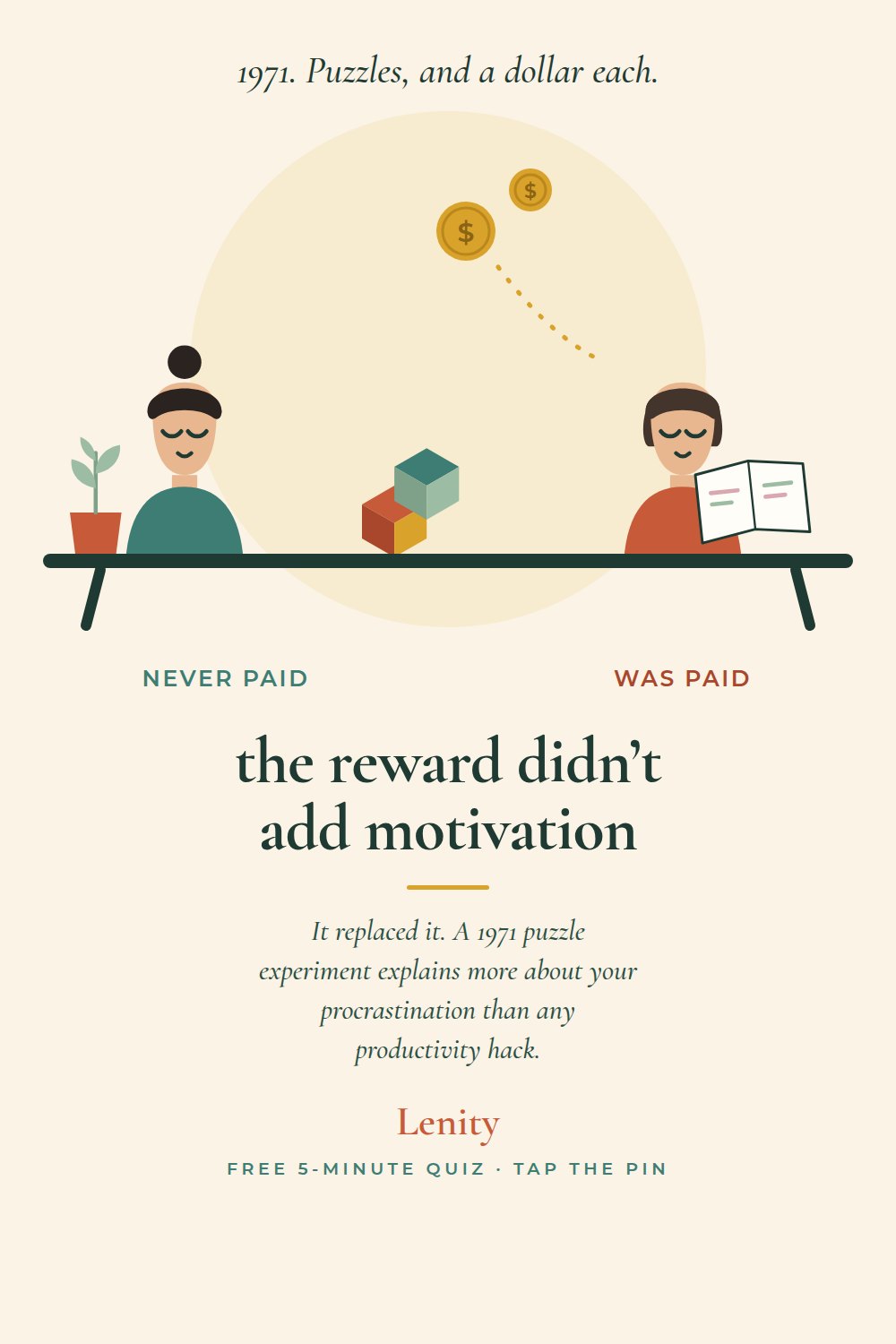
The Puzzle Experiment That Explains Why You Procrastinate
In 1971, a psychologist gave students paid puzzles — then watched what happened when the money stopped. The strange result became Self-Determination Theory, and it explains more about your procrastination than any productivity hack.
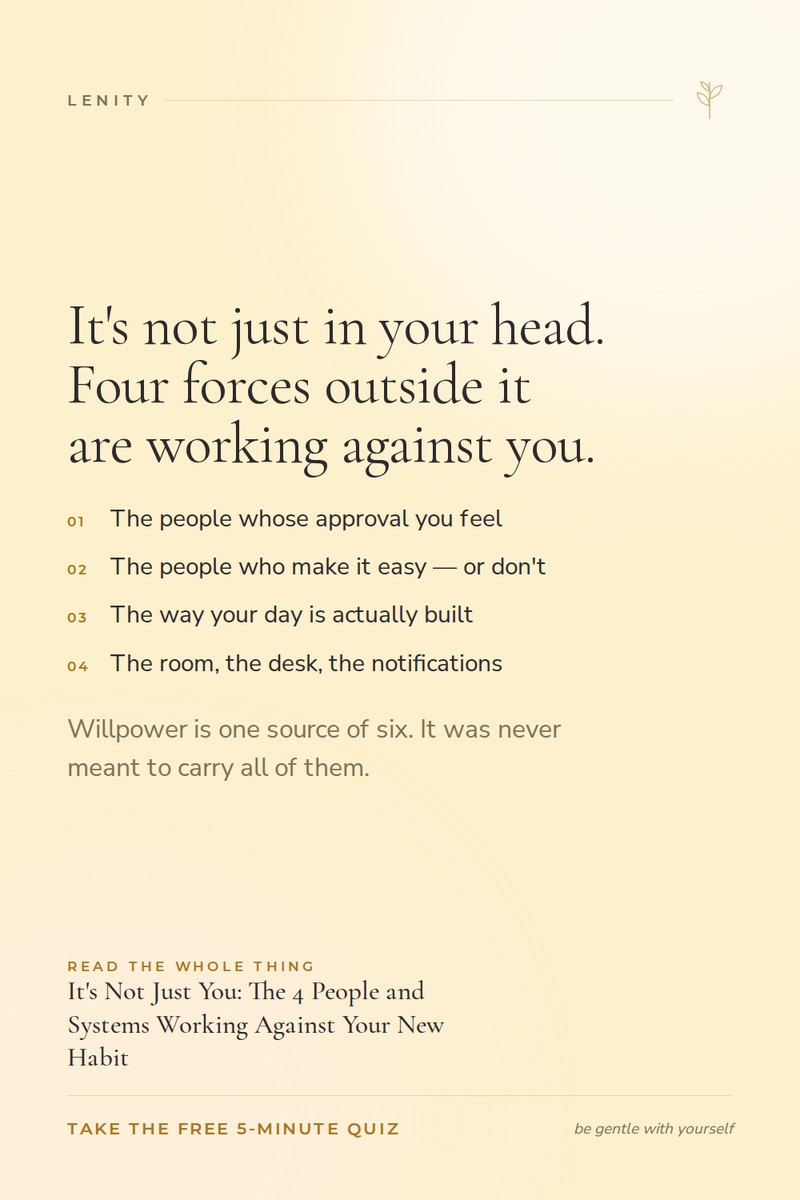
It's Not Just You: The 4 People and Systems Working Against Your New Habit
Your habits don't depend on willpower alone. People, routines and your environment can make a new habit much easier — or much harder.
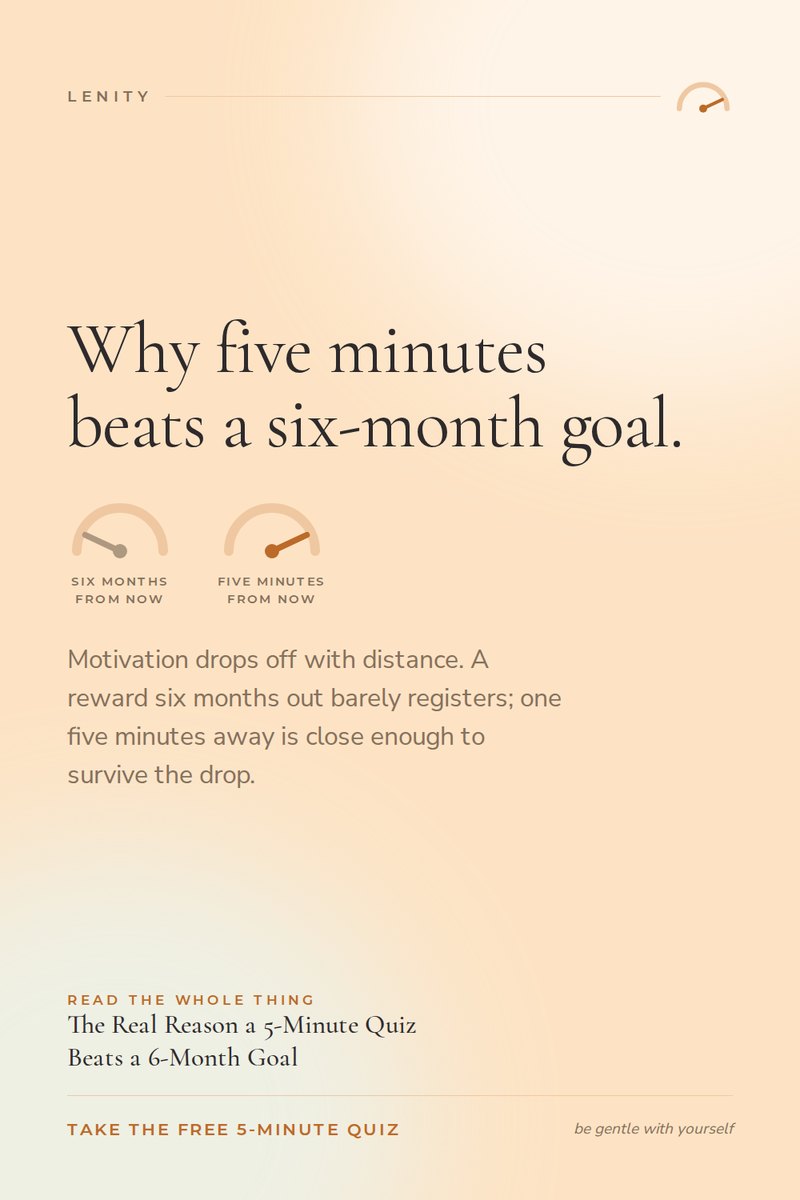
The Real Reason a 5-Minute Quiz Beats a 6-Month Goal
Long-term goals lose to immediate rewards surprisingly easily. Here's why five-minute tasks feel so much easier — and how to use that.